

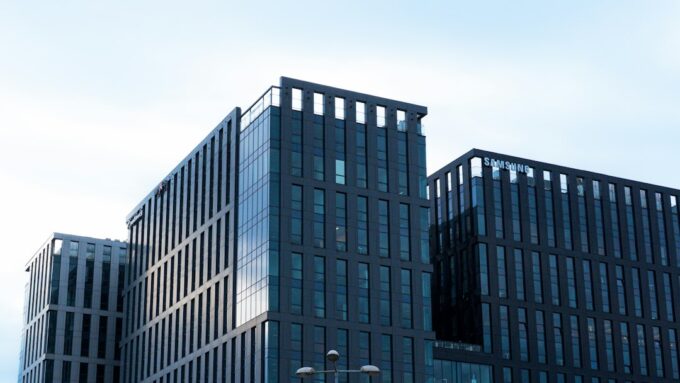
Samsung SDI Earnings Rebound Surges on Strong ESS Demand

Table of Contents
- 📰 Samsung SDI Stock: What’s Happening Right Now
- 📊 Samsung SDI’s Numbers: The Good, The Bad, The Ugly
- 🏦 What Wall Street Is Saying About Samsung SDI
- 📈 Bull Case vs. Bear Case for Samsung SDI
- ⚠️ The #1 Risk You Need to Know
- 🎯 Should You Buy Samsung SDI Stock? My Honest Assessment
- ❓ Frequently Asked Questions About Samsung SDI
- Is Samsung SDI stock a good buy right now?
- What is Samsung SDI’s stock price target?
- What are the biggest risks of investing in Samsung SDI?

삼성SDI 📊 Analyst Consensus · 33 Analysts
Low Target
₩190,000
Avg. Target
₩750,000
+44.2% upside
High Target
₩1,100,000
💡 KEY TAKEAWAY
Samsung SDI is showing the kind of earnings rebound you want to see in a cyclical battery name: revenue growth is strong, net profit has surged year over year, and ESS momentum is translating into a visibility story. The stock price may already reflect optimism, but the combination of ESS demand (including AI data center-driven storage) and a backlog that is reportedly booked through 2028 keeps the risk/reward skewed toward upside.
Samsung SDI is back in the spotlight for one reason that matters more than any macro headline: its earnings power is being pulled upward by Energy Storage System demand, not by wishful thinking. In a market that is still hypersensitive to AI infrastructure regulation and power-grid timelines, the surprising part is that Samsung SDI’s quarterly results and the industry shipment data are moving in the same direction. North American ESS growth is accelerating, and the company’s share trend is improving when you zoom in on the exact segment where the money is going: local production and AI data-center related storage.
So why does this stock matter TODAY? Because today’s stock price is not just a valuation exercise; it is a bet on whether ESS orders keep converting into earnings. And right now, the evidence points to conversion—while the bear case hinges on delays that may affect timing, but not the direction of demand.
📈 Samsung SDI 실시간 주가
삼성SDI 📰 Samsung SDI Stock: What’s Happening Right Now
Samsung SDI’s near-term narrative is being rewritten by ESS demand, and the market is starting to pay attention—almost reluctantly. Korean coverage highlights that the North American ESS market is expanding rapidly as tariffs and supply-chain restrictions push buyers toward suppliers with local production capacity. SNE Research data shows global LiB ESS shipments rising sharply: 779.9GWh in 1H-3Q this year versus 451.5GWh a year ago, up 73% year over year. The most telling detail is that shipments outside China are gaining share, and North America is growing at a blistering pace. In North America, ESS shipments reached 122.3GWh, up 71% year over year. That matters for Samsung SDI because its competitive advantage is not only chemistry; it is also the ability to supply the right form factors and scale into regulated, procurement-heavy markets.
Within that momentum, Samsung SDI is showing a clearer linkage between demand and execution. Media reporting around Samsung SDI’s Q3 2026 performance points to a sharp operating profit swing to around KRW 408 billion, with ESS orders topping 60GWh and a backlog described as fully booked through 2028. If that is accurate (and the market is treating it as credible), it changes how investors should think about quarterly volatility. Instead of “will orders come?”, the debate becomes “how fast will they be recognized?”
Meanwhile, broader market headlines have been dominated by AI data center regulation fears. There is a valid concern that policy decisions could delay construction schedules and therefore affect downstream equipment demand. Yet Samsung SDI’s story appears more insulated than the typical AI semiconductor proxy. ESS demand is tied to electricity storage needs for grid reliability and peak management—needs that do not vanish because politics gets louder. The stock is reacting to the same macro news, but the company-specific engine is stronger than the market is willing to admit.
삼성SDI 📊 Samsung SDI’s Numbers: The Good, The Bad, The Ugly
Let’s start with the headline: Samsung SDI’s revenue growth remains strong, and net profit has surged year over year even though operating profit declined. That mix is not “clean,” but it is far from alarming for a company in a demand-driven transition. The latest quarterly comparison (2026.06 vs 2025.06) shows revenue at KRW 37,688억, up 18.5% year over year. Gross profit is KRW 9,372억, reported up 234.0% year over year—an enormous swing that suggests either improved pricing, product mix, utilization, or some combination of all three.
Operating profit, however, is KRW 2,037억, down 27.4% year over year. That is the “bad” in the quarter, and it tells you that cost pressures, investment spend, or segment-level margin dynamics are still in play. The “ugly” part is that operating profit weakness could have derailed the story—yet net income shows KRW 3,421억, up 324.4% year over year, compared with a negative year-ago net profit of KRW -1,525억. In other words, bottom-line performance is being supported by factors beyond operating profit alone, such as financial items, tax effects, or one-off components. Investors should not ignore this, but they should also not dismiss it: when net profit flips from loss to profit at this scale, it provides real earnings capacity and improves capital-market confidence.
Margin-wise, the company’s gross margin is 23.3% and operating margin is 8.7% based on the provided real-time metrics. Operating margin at 8.7% is not “distressed,” and in a battery cycle, it is a level that can support re-investment while still rewarding shareholders if ESS mix continues to improve.
One sentence interpretation: Samsung SDI is experiencing a quarter where revenue and net profit trends are clearly improving, while operating profit is temporarily pressured—exactly the kind of setup where investors should focus on backlog and segment demand conversion rather than a single operating line.
🏦 What Wall Street Is Saying About Samsung SDI
Wall Street’s view on Samsung SDI is decisively constructive, at least in consensus terms. The provided data shows 33 analysts covering the stock, with the investment consensus tilted to “Buy” with a score of 1.73. That is not a lukewarm stance; it implies analysts see enough fundamental support to justify expectations for continued earnings momentum.
The market’s pricing of that optimism is visible in the analyst price targets. The average target price is KRW 750,000, while the highest target reaches KRW 1,100,000 and the lowest target is KRW 190,000. The range is wide, and that width is itself a signal: analysts are not debating whether the ESS theme is real; they are debating how much of the backlog will translate into sustained margins versus timing and cost pressures.
At a current stock price of KRW 521,000 and a forward-looking context that includes a leading PER of 28.9, the key question is whether the valuation already discounts the best-case execution. If you believe the backlog is truly booked through 2028 and that ESS demand keeps accelerating in North America, then the multiple is easier to justify. If you believe operating margin pressure will persist and net profit benefits are partly non-recurring, then the multiple looks demanding.
My take: analysts may be slightly underestimating how quickly investors can re-rate Samsung SDI once ESS order conversion shows up in operating profit, not just net income. But they are also right to be cautious about the operating line. The stock price can rise even with choppy operating margins if guidance and backlog remain strong; however, sustained rerating typically requires operating profitability to stabilize or expand.
📈 Bull Case vs. Bear Case for Samsung SDI
🟢 Bull Case
- North American ESS shipment growth is accelerating (71% year over year), and Samsung SDI’s presence in that market should improve as local production and AI data-center projects translate into actual deliveries.
- Backlog visibility supports earnings durability: reported ESS orders “top 60GWh” with a backlog described as fully booked through 2028, reducing the probability of a demand cliff.
- Gross profit expansion is already visible (gross profit up 234% year over year), giving Samsung SDI a path to recover operating profit as cost and mix normalize.
🔴 Bear Case
- Operating profit fell 27.4% year over year; if that reflects structural cost pressure or unfavorable mix, the valuation multiple could compress even if revenue grows.
- AI data center regulation and power-grid investment delays could push timelines, creating a timing mismatch between orders, production, and revenue recognition.
- The stock is already priced for strong execution (leading PER 28.9); any disappointment in margin trajectory could trigger a sharp re-rating downward.
⚠️ The #1 Risk You Need to Know
The single biggest risk for Samsung SDI is that ESS demand stays strong but operating margins do not recover. In other words, the company could keep winning orders while still delivering weaker operating profitability due to cost inflation, ramp inefficiencies, or mix headwinds. That would not kill the long-term thesis, but it can absolutely derail the stock price by limiting how much earnings the market is willing to pay for.
🎯 Should You Buy Samsung SDI Stock? My Honest Assessment
I rate Samsung SDI a Buy, with a clear bias toward accumulation on weakness rather than chasing strength. The current stock price is KRW 521,000, while the average analyst price target sits at KRW 750,000 and the highest target is KRW 1,100,000. That spread is not just optimism; it is the market’s disagreement about how fast earnings quality will improve as ESS backlog converts into operating profit.
Who is this stock for? Samsung SDI is best suited to growth-oriented investors who can tolerate quarterly margin noise but want exposure to a structural demand driver: North American ESS tied to grid reliability and AI data-center electricity storage. If you are seeking stable income, this is not a bond substitute. If you want a high-conviction thematic equity with a measurable execution track, this fits.
What price level makes sense? Based on the current valuation (leading PER 28.9) and the earnings rebound evidence, I would treat KRW 480,000 to KRW 520,000 as a constructive entry zone. Below that, risk/reward improves meaningfully. Above KRW 600,000, the stock may still rise on momentum, but the margin of safety shrinks.
Timeline: this is a long-term hold thesis. Short-term trading is possible around news flow and quarterly guidance, but the real catalyst is the sustained conversion of ESS orders into earnings through 2028.
❓ Frequently Asked Questions About Samsung SDI
Is Samsung SDI stock a good buy right now?
Yes. Samsung SDI offers a rare combination of revenue growth, a major net profit rebound year over year, and ESS-driven visibility that can support earnings durability. The valuation is not cheap, but the demand conversion story is strong enough to justify buying with discipline.
What is Samsung SDI’s stock price target?
The provided analyst average target is KRW 750,000, with a high target of KRW 1,100,000 and a low target of KRW 190,000. My view is that KRW 750,000 is a realistic “base case” target if operating profit stabilizes over the next couple of quarters; the upside case depends on margin recovery, not just shipments.
What are the biggest risks of investing in Samsung SDI?
First, operating margin pressure could persist even if revenue grows. Second, AI data center and power-grid regulatory delays could affect project timing and revenue recognition. Third, the stock’s current multiple leaves less room for error if earnings quality disappoints.
Samsung SDI is a story stock, but it is becoming a numbers stock again—driven by ESS and backed by improving demand signals. This analysis reflects my perspective based on the data you provided and the news context, not financial advice. If you disagree—especially on operating margin recovery—share your take in the comments. I’m genuinely interested in what you think the market is still missing.
📌 Related Articles


댓글이 닫혔습니다.